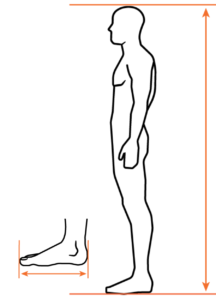

The design of your new frame will be based on several factors including the intent of the bike, your riding style and your flexibility. The measurements of your body are one of the key elements taken into account in frame design. Before your frame is designed you will need to make careful body measurements. These numbers will be an important part of the design of your bike frame, so take your time and make sure these measurements are as accurate as possible.
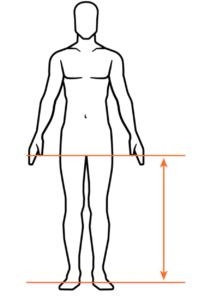
Stand bare footed with your back straight up against a wall. Place your feet about four inches apart. Be sure to stand on a hard, level surface. Place a straight edge between your legs; raise it until snug against your crotch (this mimics the bike’s saddle). Make sure the straight edge is level. Have another person measure from the top of the straight edge straight down to the floor.
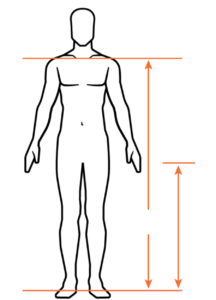
Stand bare footed with your back straight up against a wall. Place your feet about four inches apart. Be sure to stand on a hard, level surface. Locate your clavic notch. This is the notch at the base of your neck that forms the “V” between your clavicles. Have another person measure from your clavic notch down to the floor.
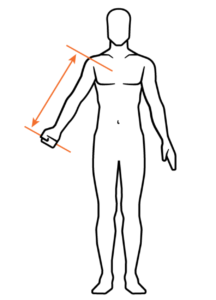
Find the end of your acromion bone, which is located at the very tip of your shoulder, slightly toward the back of your shoulder. Make a fist around a pen or pencil (on the same side as shoulder you’ve chosen). Hold your arms out at a 45 degree angle from your side. Have your helper measure from the end of your acromion bone to the pencil in your fist.
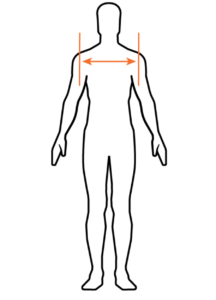
Body measurements / Shoulder width It locates the ends of both acromion, located at the tip of the shoulders, towards the back. Have your assistant measure your back from the tip of one acromion to the other.
Stand bare footed on a hard, flat surface with your back against a wall. Feet should be spaced just less than shoulder width apart. Have your helper measure your overall height. Measure in total inches or centimeters, rather than feet plus inches (or meters plus centimeters).